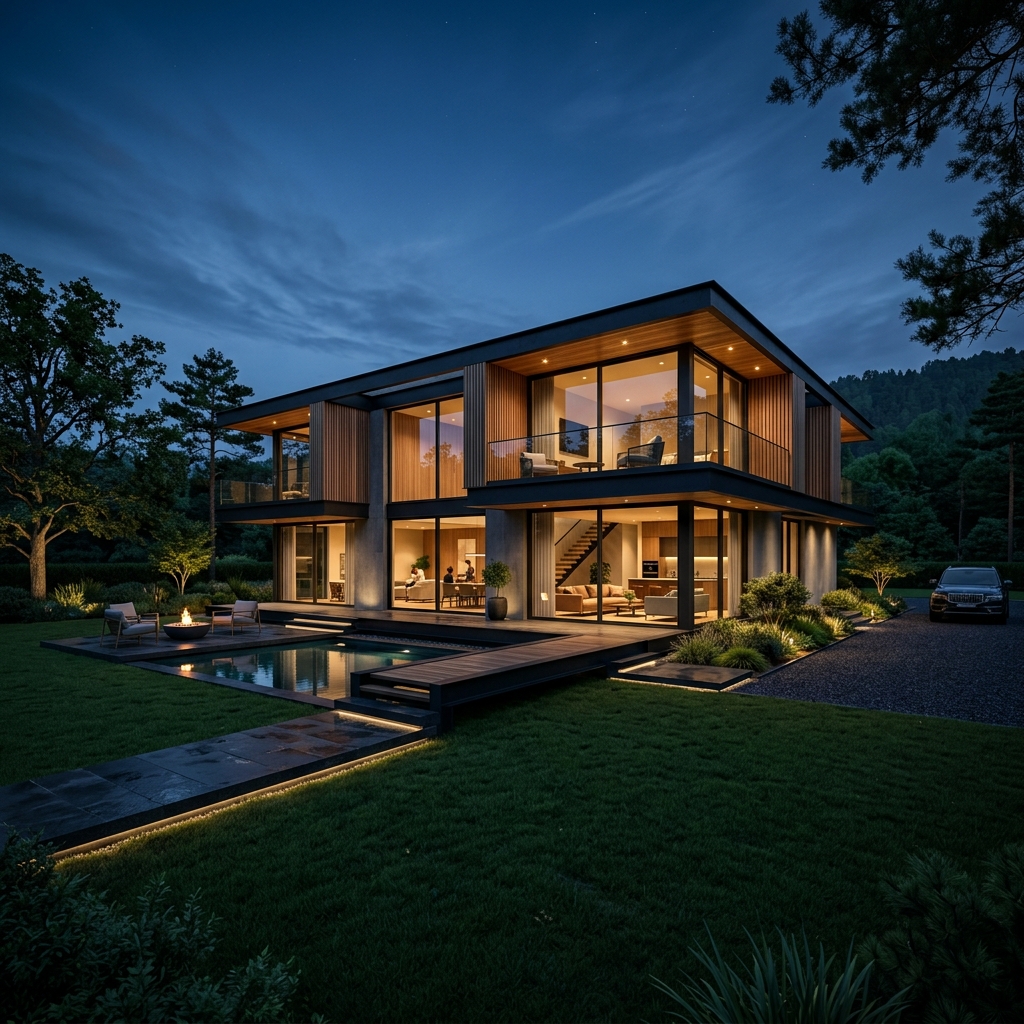
Is Steel Villa Earthquake Resistant?
Türkiye's most comprehensive guide about the earthquake performance of light steel structures, their carrier system details and their miraculous resistance to seismic movements.
Earthquake Performance of Light Steel Systems
In a geography like Türkiye, located on active fault lines, the most important criterion in housing selection is undoubtedly is earthquake resistance. While the major disasters experienced in recent years have questioned the trust in traditional reinforced concrete structures, light steel villas It stands out as the most reliable alternative in seismic security.
Two basic physical rules underlie the superior resistance of steel structures to earthquakes: Lightness And Ductility (Flexibility).
1. Building Weight and Seismic Load Relationship
According to the laws of physics, the seismic load (horizontal force) acting on the structure during an earthquake is directly proportional to the mass of the building. In other words, the heavier a building is, the more violently the earthquake waves shake that building and apply destructive force.
- A standard reinforced concrete building has approximately 1.5 to 2 tons It weighs between .
- A light steel construction villa is only 150 - 250 kg weighs.
Average compared to reinforced concrete 10 times lighter Steel villas feel the earthquake energy much less. No matter how violently the ground shakes, the load on the structural elements remains at a minimum level because the mass of the building is low.
2. Ductility (Flexibility) Capacity of Steel
What destroys buildings during an earthquake is not the earthquake itself, but the fragility of the material. Concrete is a brittle and brittle material due to its structure; When the flexibility is exceeded, it suddenly cracks and collapses. However Steel is one of the most ductile (flexible) building materials in nature.
During an earthquake, the steel carcass system flexes like a spring, absorbs the earthquake energy, and returns to its previous form when the earthquake passes. Thanks to this feature, steel villas do not break, crack or experience sudden collapse (pancake effect).
Steel Villa in Earthquakes of 7 or More Magnitude
In devastating earthquakes of magnitude 7.0 or greater, the goal is to "ensure life safety and prevent collapse." Light steel villas fulfill this goal greatly thanks to their special bolted and screwed joints. In very severe earthquakes, drywall cracks or coating damage may occur, but steel main frame does not collapse. This protects 100% of the life inside.
Steel Villa vs Reinforced Concrete: Earthquake Comparison
To understand which building system is safer, let's compare its seismic behavior in detail:
Soil Survey & Foundation Interaction
The earthquake safety of a building depends not only on the superstructure but also on the soil-foundation relationship. Steel villas are generally built on Raft Foundation or Raised Concrete Foundation.
Because the building is very lightweight, it can be safely constructed even in areas with low soil bearing capacity. In poor soils where reinforced concrete buildings could sink or tilt due to liquefaction, steel villas do not overload the ground thanks to their lightness.
How resistant to earthquake is the steel villa?
How resistant to earthquake is the steel villa?
Steel villas do not collapse in severe earthquakes thanks to their flexible structure. Being 10 times lighter than reinforced concrete, they greatly reduce the horizontal seismic loads acting on buildings during an earthquake.
Will a steel villa be damaged in a magnitude 7 earthquake?
No. A steel villa built with correct engineering is designed to survive earthquakes of magnitude 7 and above without causing catastrophic damage to its carrier system.
Can a steel villa be repaired after an earthquake?
Yes, even if there is stretching or local damage to the carrier frame in a very large earthquake, the house can be completely repaired by removing the damaged steel profiles and easily replacing them with new ones.
Get a Quote for Your Dream Earthquake-Resistant Home
Discover our light steel villa models under the assurance of Architect İdris YAĞMAHAN or get an instant quote.